

Role-based training for every team
Teams perform better when training matches the job. Opus delivers role-specific paths to help every position ramp with confidence.
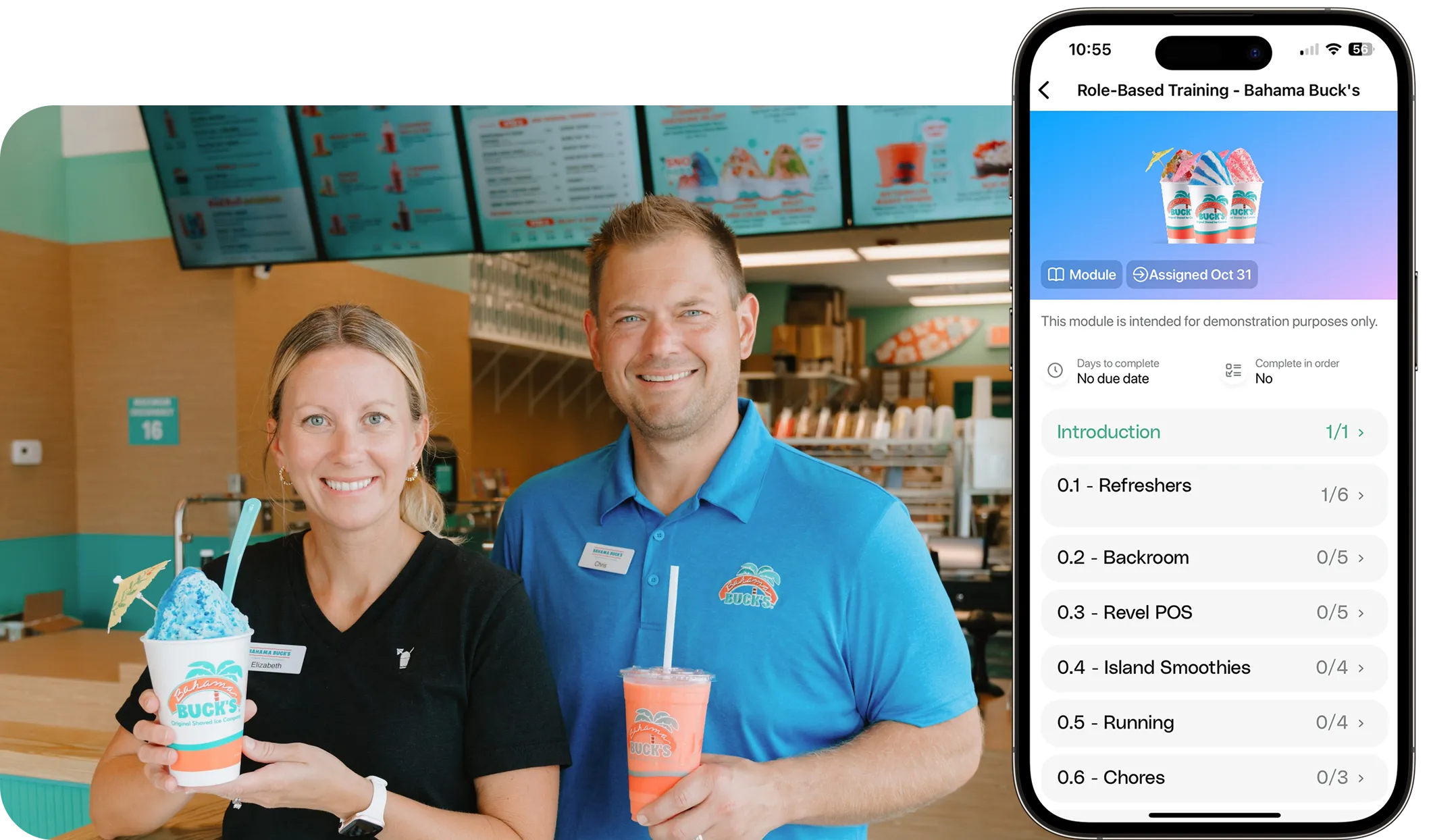
How Opus works for role-based training
One-size-fits all training wastes time and drives turnover. Opus delivers role-specific paths that get people productive in days and engaged for the long term, because training finally matches the work.
Role-specific paths, automated
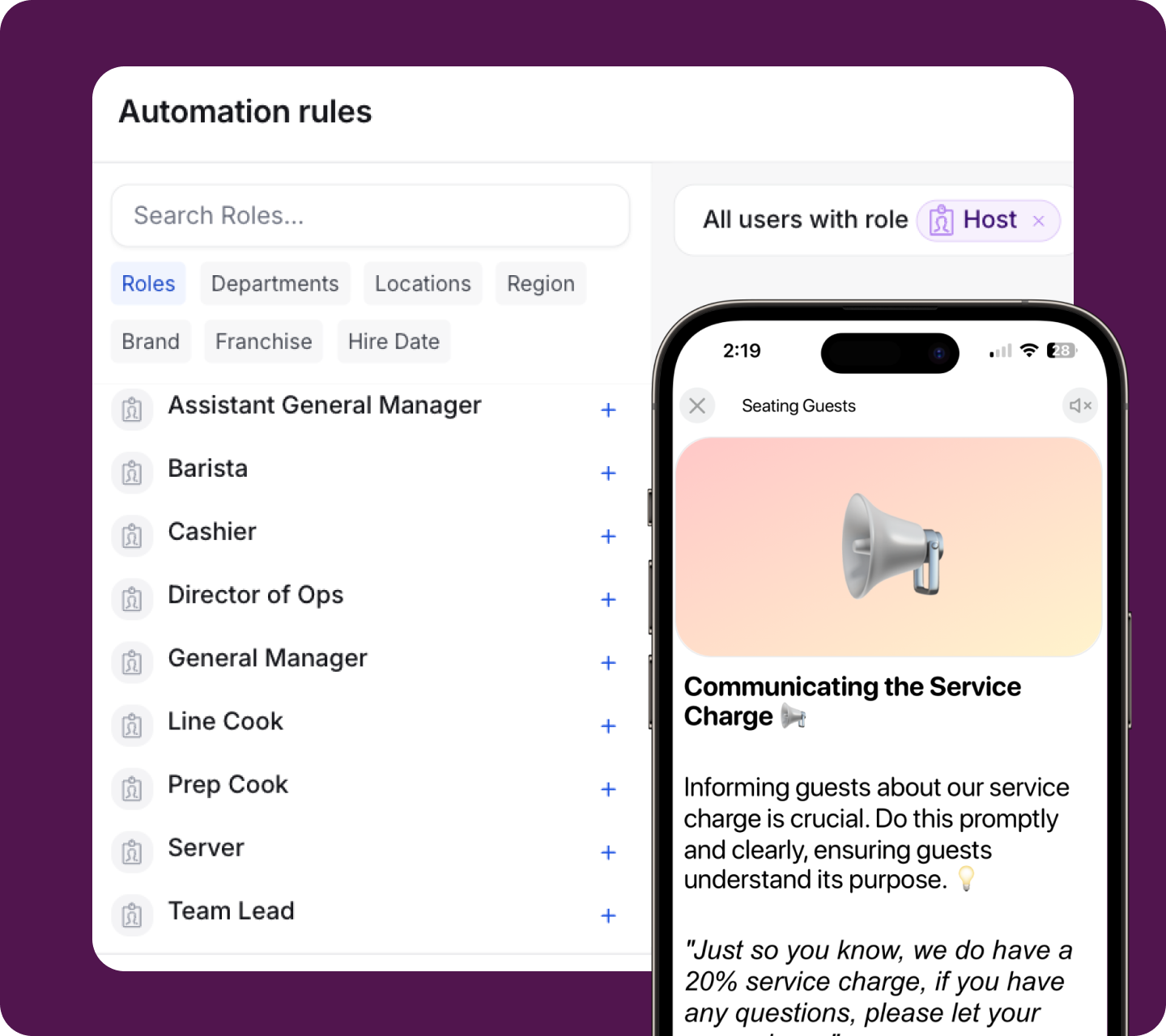
Opus automatically assigns learning paths based on role, with customizable pacing. (Many teams pace training by certification level or 30-60-90-day plans.) When roles change in Opus, training paths update automatically.

Trackable in-person coaching
With Opus, digital training and on-the-floor coaching are tracked together in one curriculum. Digital modules teach the basics, while in-person check-ins let managers verify skills on the floor.
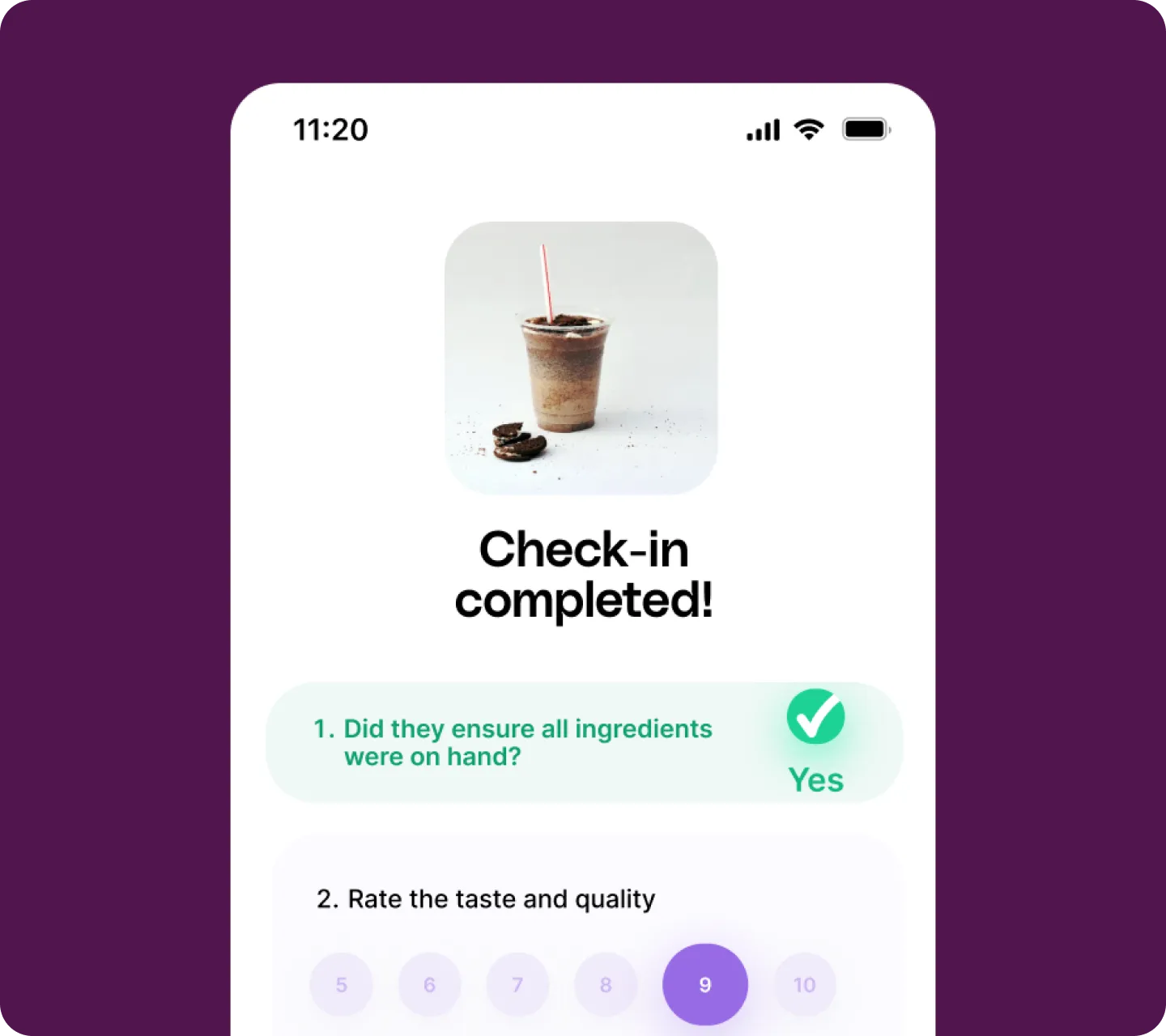
Depth to match every role
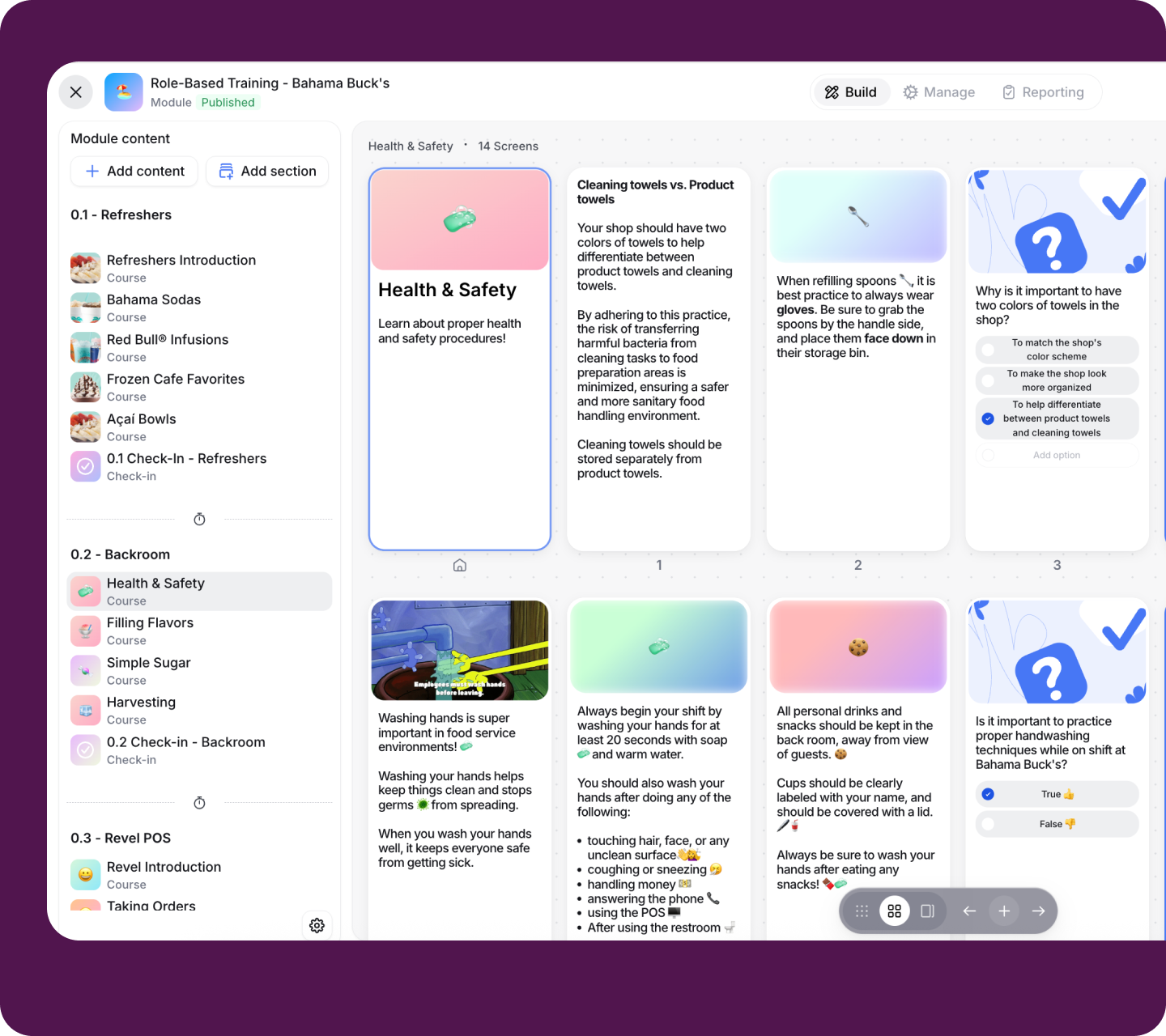
Different roles require different levels of training. Short micro-courses help crew learn daily tasks quickly, while deeper modules with videos, PDF’s, and check-ins support advance technical and service standards. Train to the complexity of the role, with full control over depth and format.

Cross-training, simplified
Many employees work across roles or support the same role for different brands. Opus makes it easy to assign secondary training, reuse shared modules, and track progress in one place.
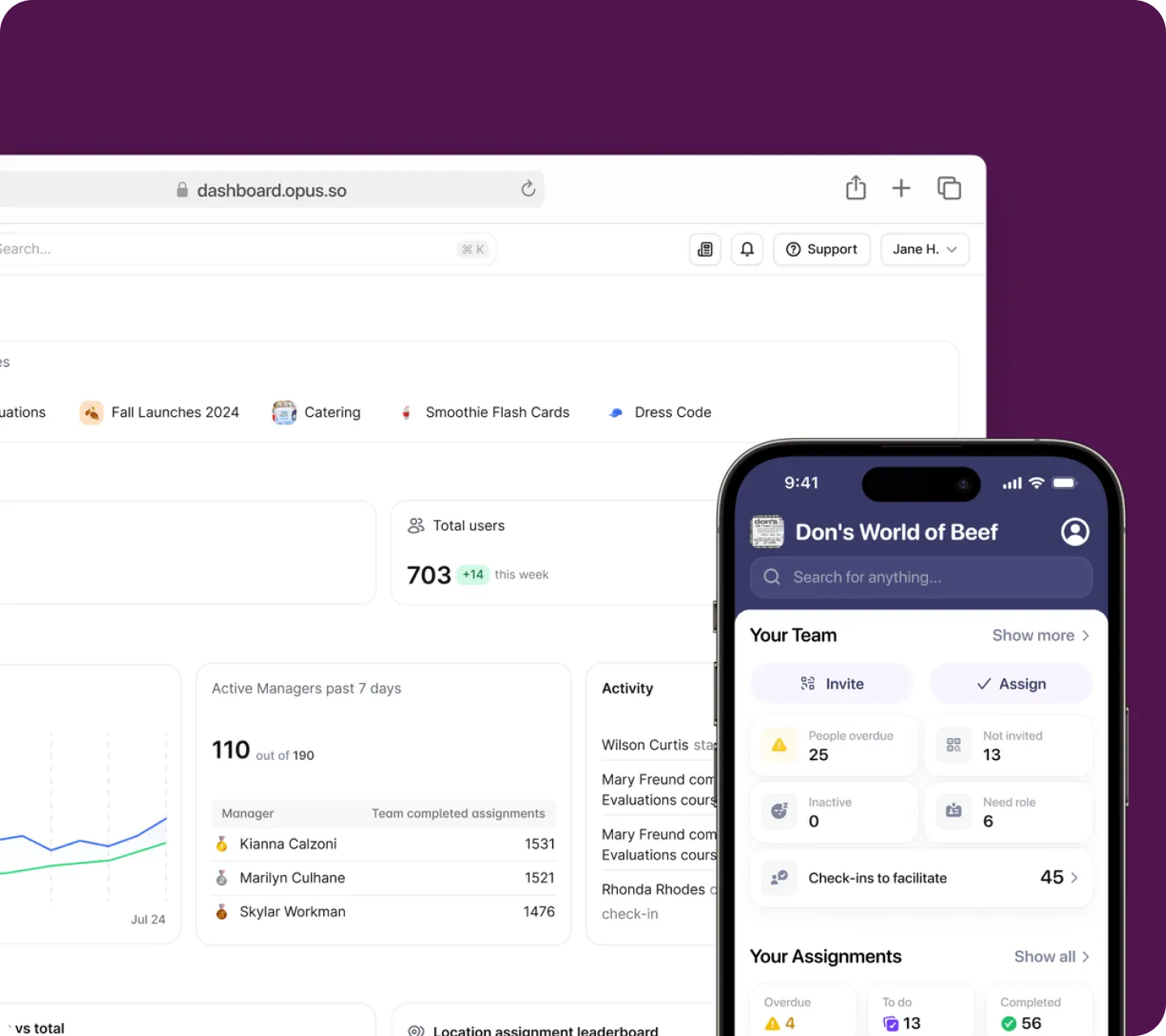
Custom training at scale without the admin hours
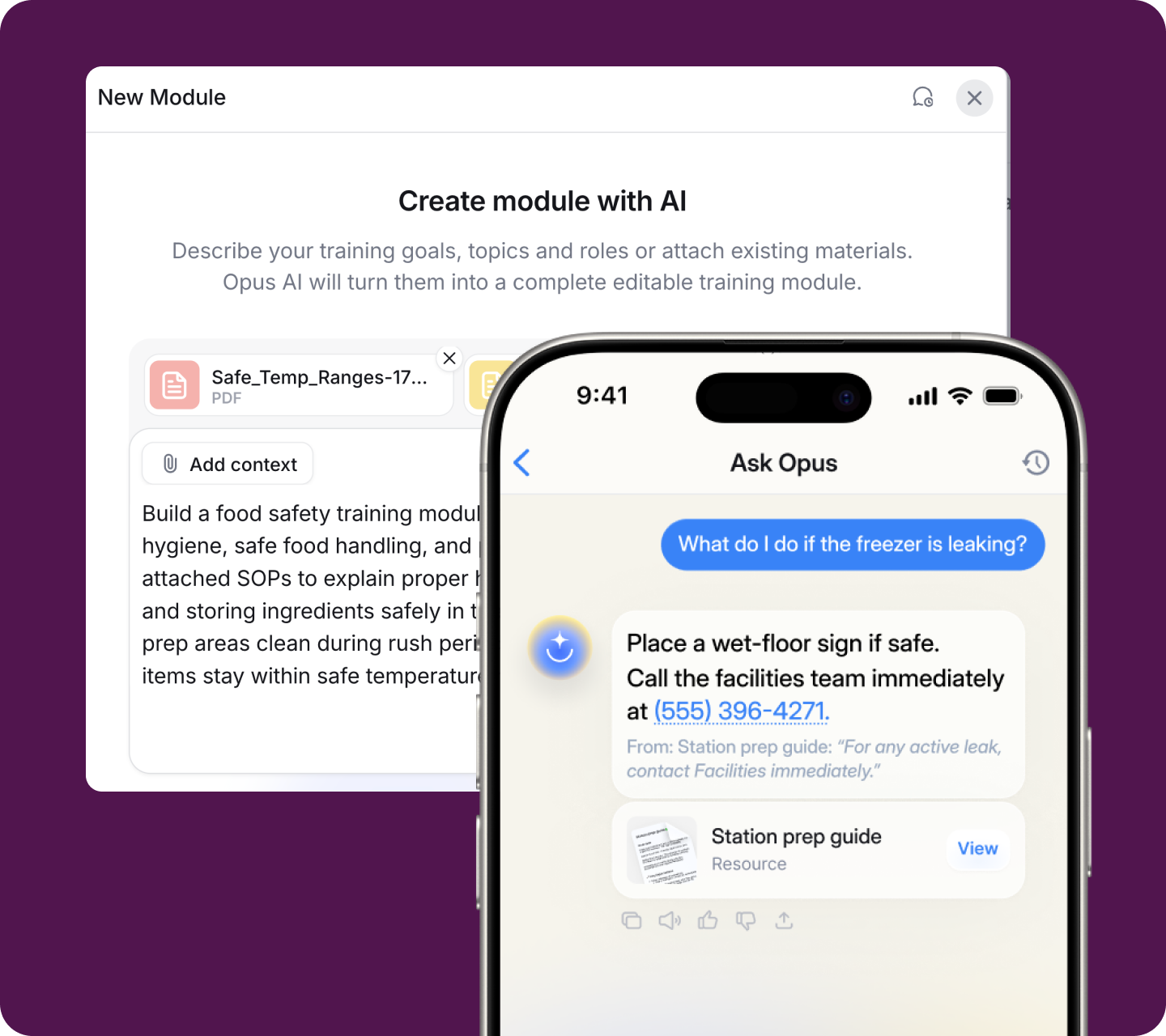
Opus makes role-based training easy to manage. Upload videos, PDFs, and guides to make searchable on the floor, then use AI Builder to turn them into mobile training.
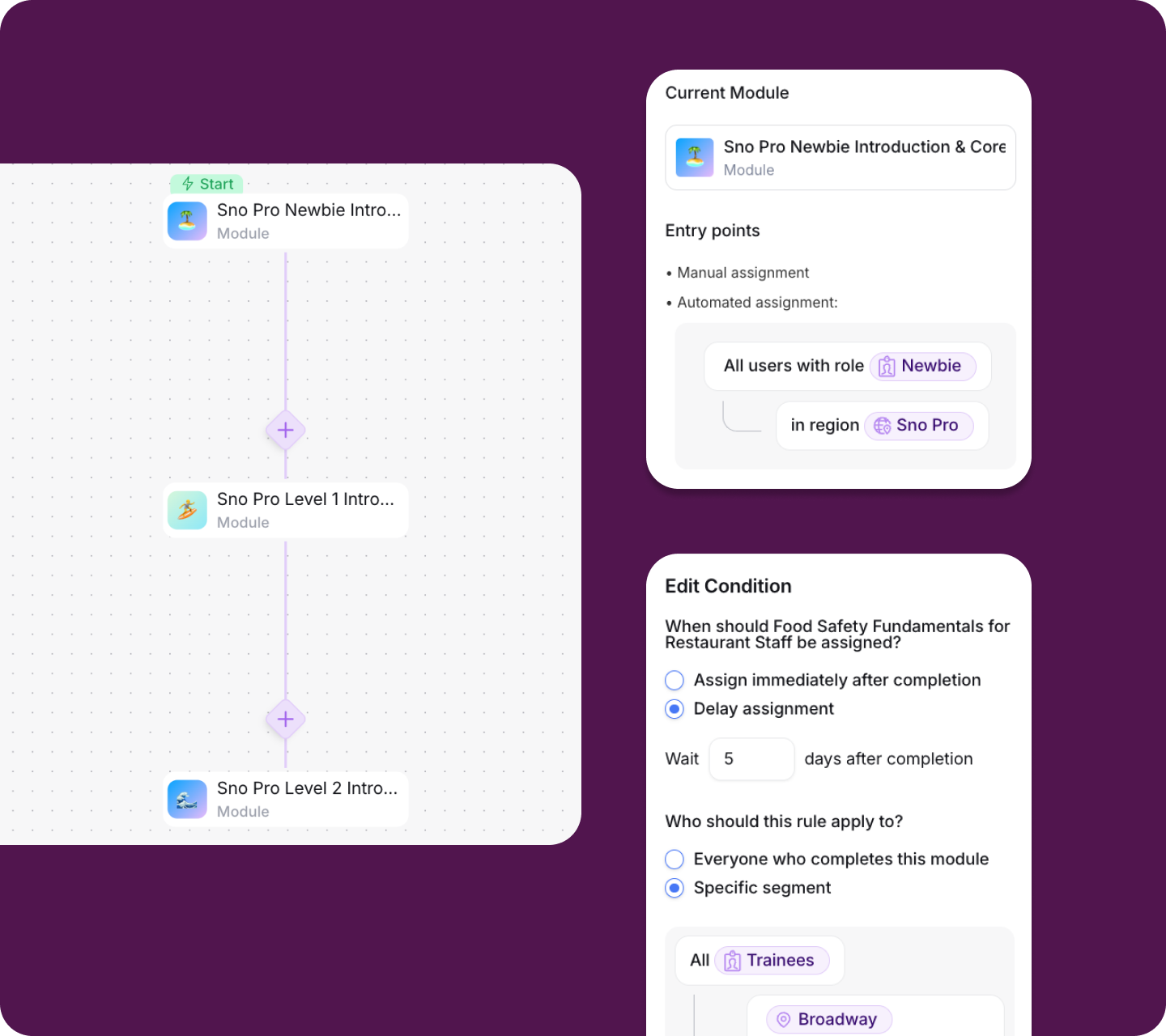

Built for how you operate

The Feinstein Group — Uses a shared host curriculum across brands, creating natural cross-training that lets staff move between restaurants with ease.
Rising Tide Car Wash — Use Opus to build sales and service training for FOH staff, resulting in a membership upsell conversion increase from 5% to 18%
Bahama Buck's — Role-specific onboarding reduced new hire ramp time by 25%, with clear progression from crew through shift lead to management

Bricktown Brewery — Combined universal onboarding with role-specific field training and in-person check-ins, creating a repeatable process that improved 90-day retention by 9%.
The complete training operations platform
Everything your team needs to train, work, and grow—in one place


Frequently asked questions
The Feinstein Group uses a cross-training approach across its restaurant concepts. Their teams complete a core host path, then take on additional modules when supporting other roles or locations, giving managers clear visibility into each employee’s proficiency across roles. Read their story →
Ready for
what’s next?
