

Training that launches stronger new stores
Every opening sets the standard for what comes next. Opus helps multi-location teams train faster with structured programs that turn chaos into consistency.
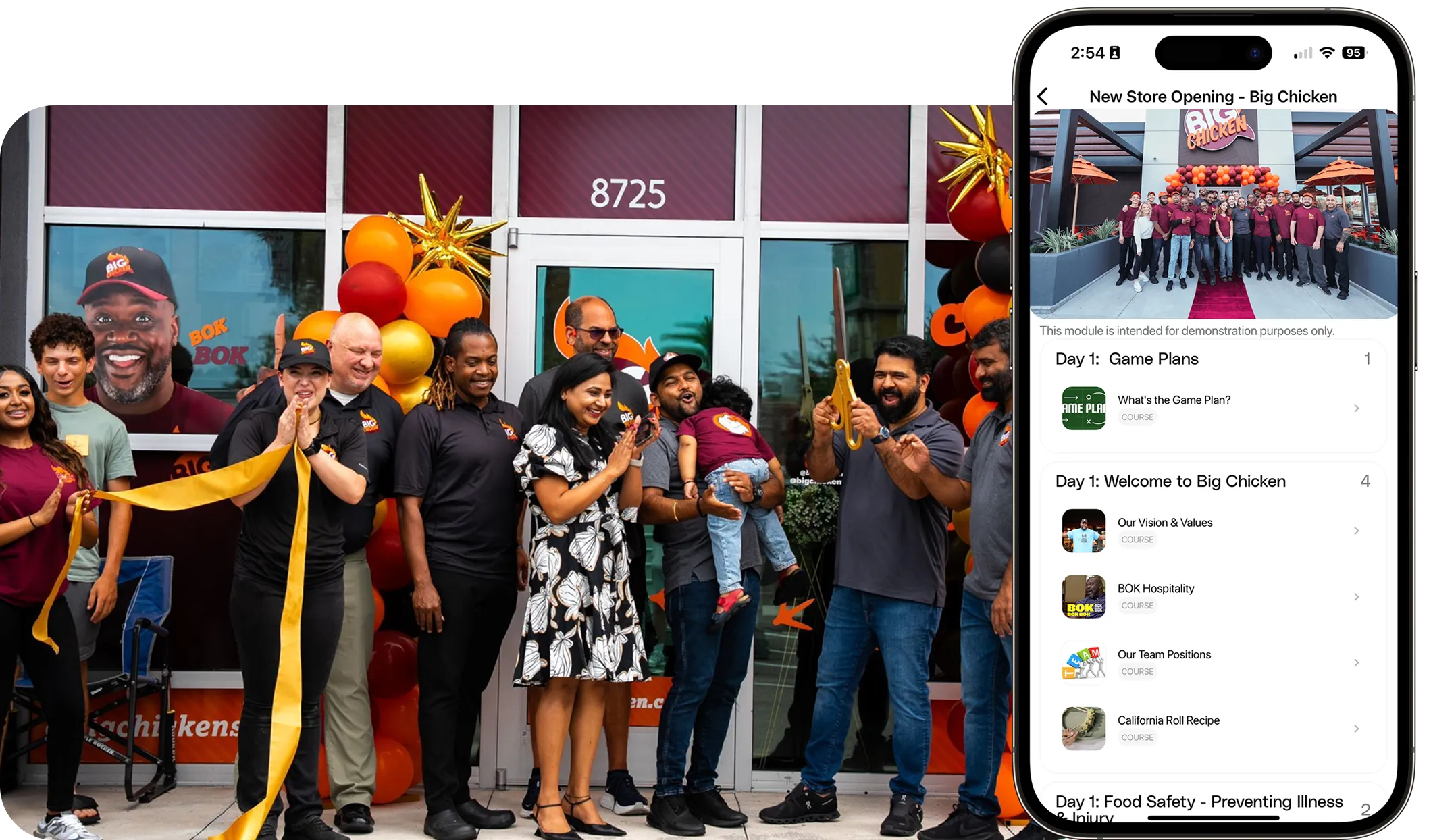
How Opus helps streamline new store openings
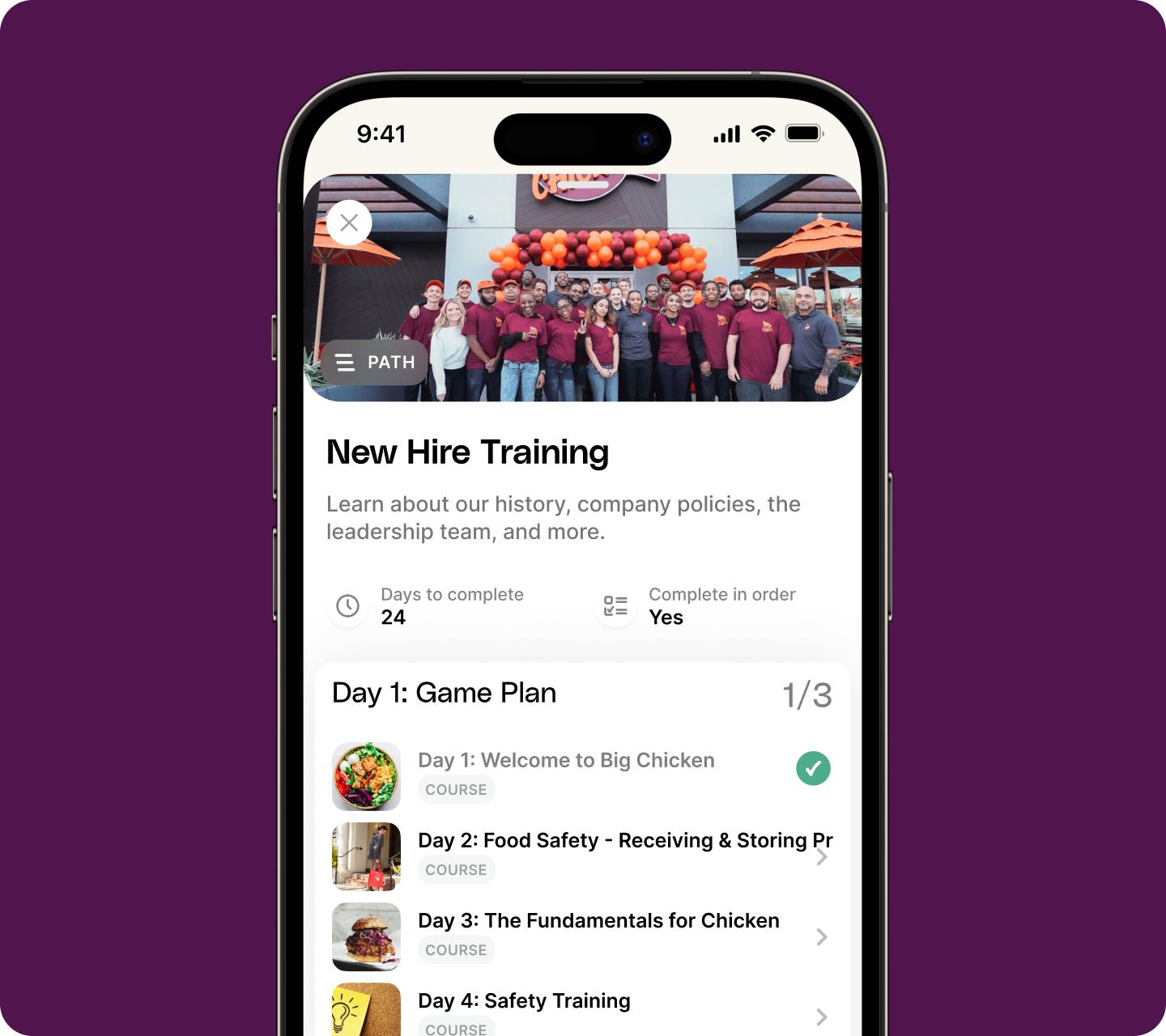
Traditional training overwhelms teams with marathon sessions. Opus combines pre-learning with in-person validation, so your new store becomes productive faster.
Pre-learning accelerates live training
Team members complete essential training before arriving. Time on-site is reserved for skills practice and Q&A, not cramming knowledge.

Prescriptive or flexible programs
Some teams need exact schedules for repeatable results, others need adaptable paths that flex. Opus supports both, so training fits the way your business actually opens stores.
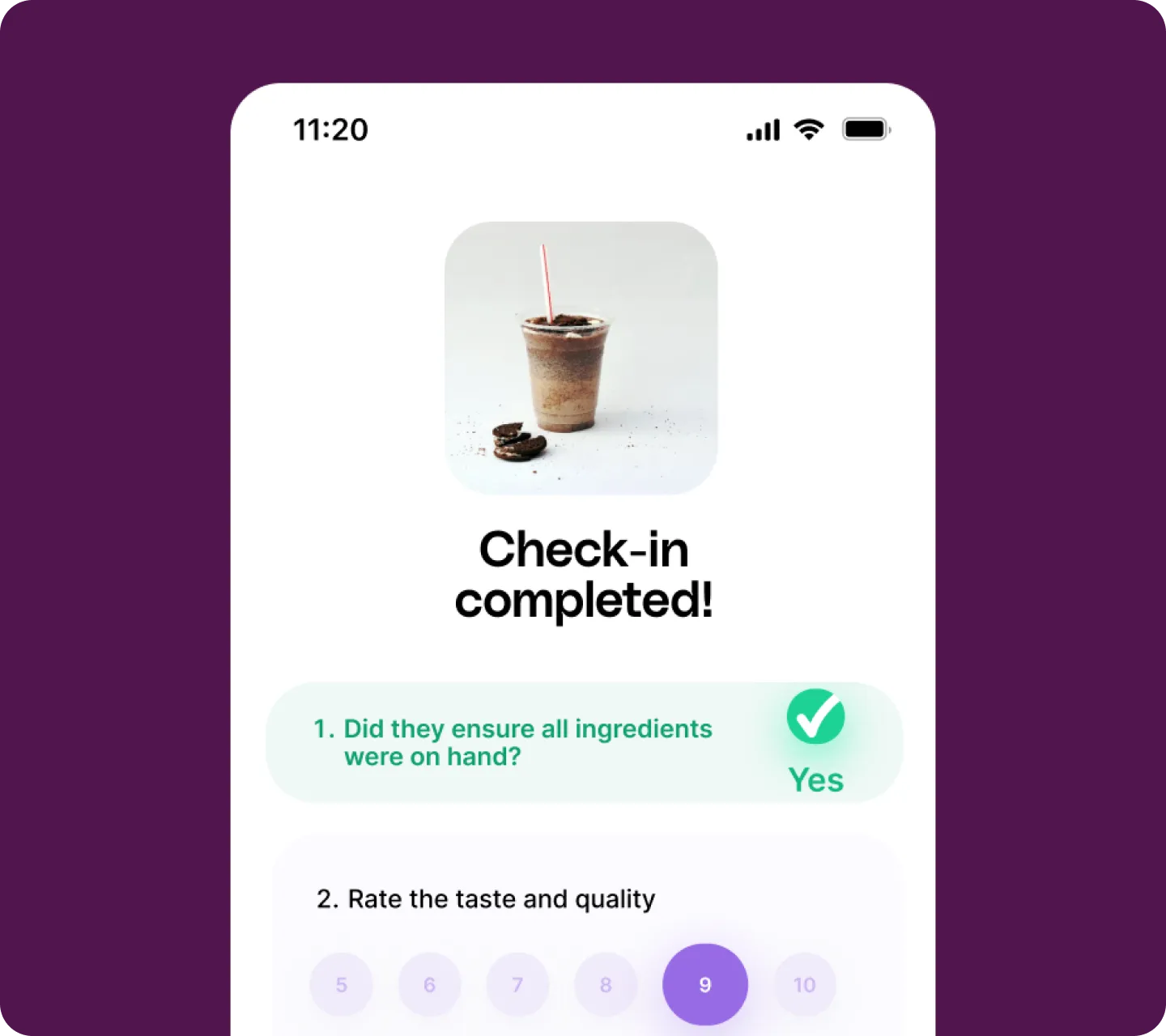
Skills validation before opening
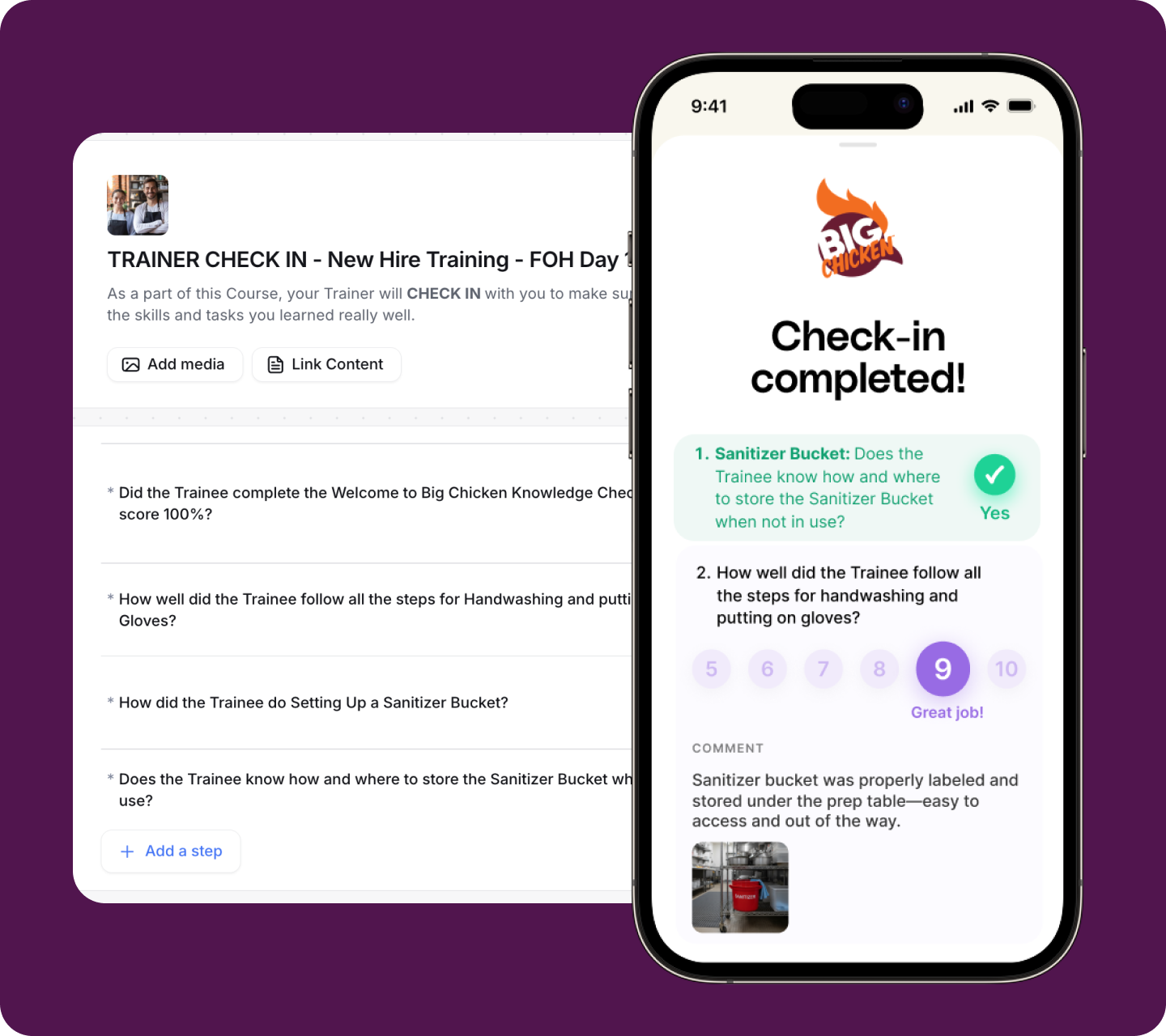
Managers verify team members perform actual tasks through Check-ins. Know exactly who's ready before doors open.
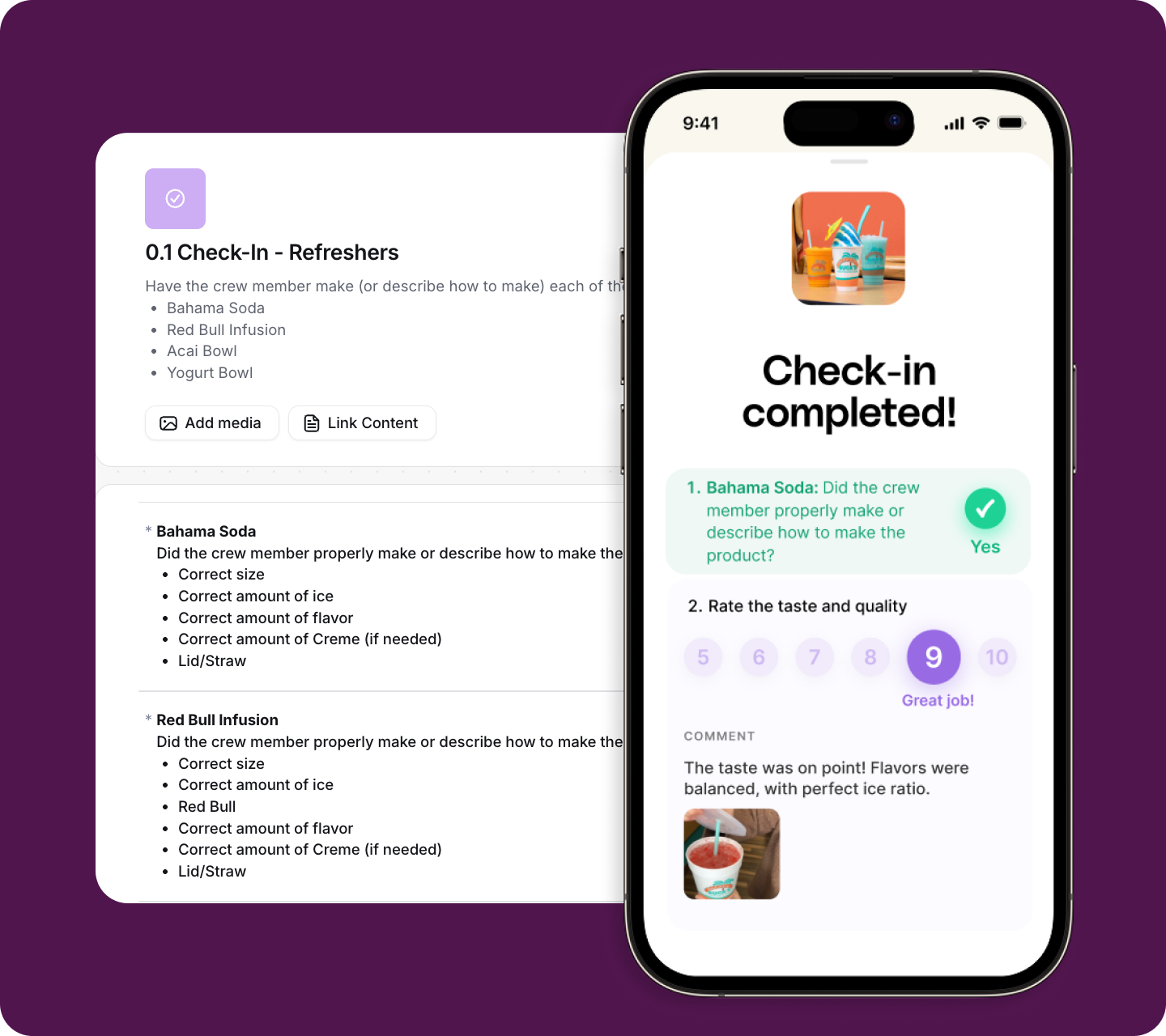
Training embedded in daily work
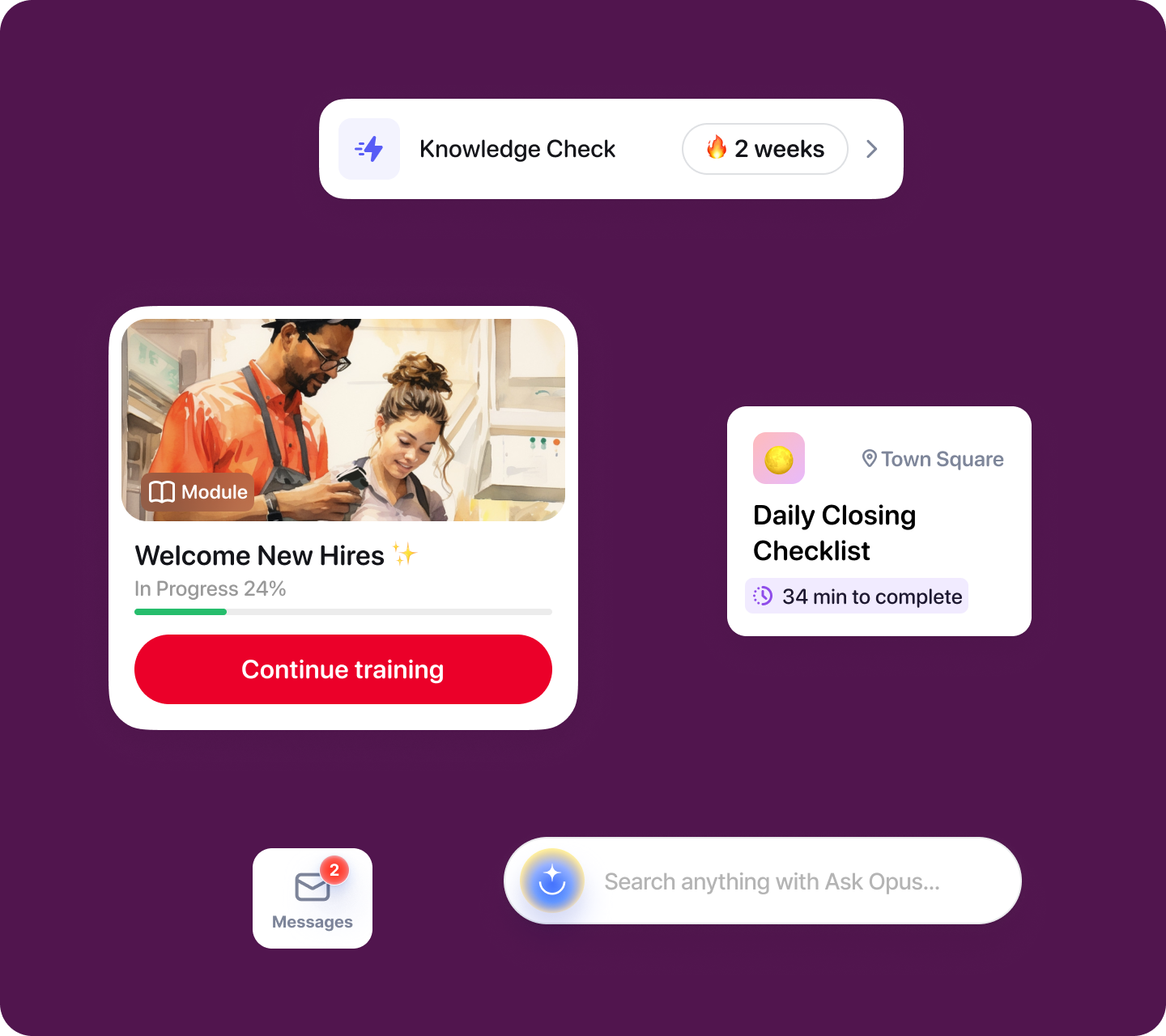
Refresher courses, checklists, and searchable answers keep standards visible and accessible at every stage of operation.
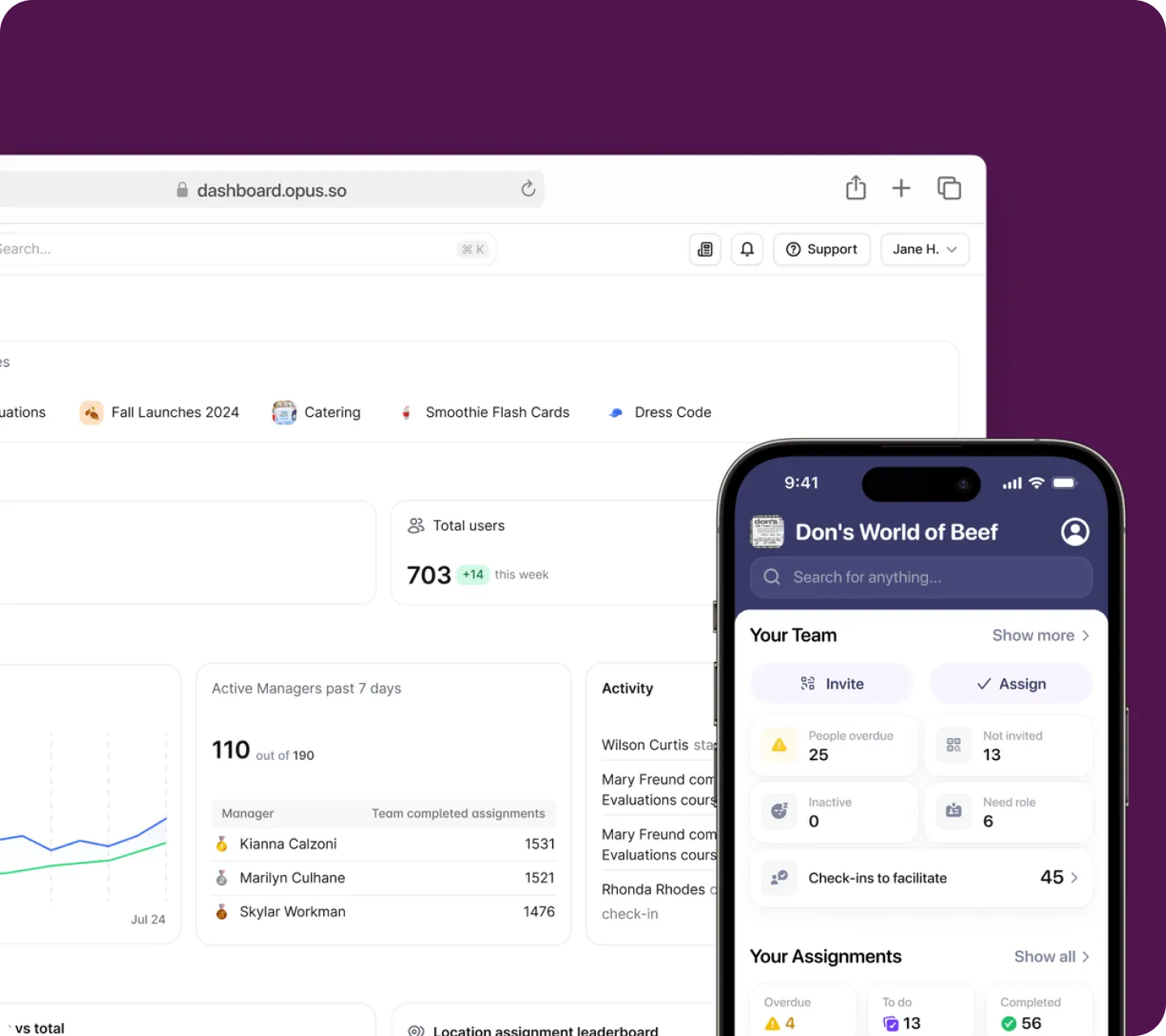

Built for how you operate
Big Chicken — Trainer-led approach with self-paced materials cut training time from 10 days to 7, across 40+ new location launches.

Sparkle Dog Grooming — Reduced 3 days of content into 1.5 hours of focused NSO training, making openings more effective without overwhelming new teams.
Salt & Straw — A five-phase NSO playbook and expanded training team supports openings in new markets like NYC.

Clutch Coffee — Keeps onboarding consistent across 14 locations with a flexible training system built for rapid growth across the Carolinas.
The complete training operations platform
Everything your team needs to train, work, and grow—in one place


Frequently asked questions
Ready for
what’s next?
